Cultural Memorial Buildings 19 and 21 in Niyajevac, Serbia

Cultural Memorial Buildings 19 and 21 in Niyajevac, Serbia

Located in Kniajevac, Serbia, these are two culturally significant buildings. On the 19th, there is a charming building that showcases the traditional architectural style of this city. This building has been restored and protected, showcasing traditional Serbian craftsmanship and architectural techniques. It is a historic place that provides visitors with an opportunity to learn about local culture and history. On the 21st, it is a modern building that showcases the urban development of Kniajevac. It is a multifunctional building that includes commercial spaces, offices, and residences. The design of this building is modern and unique, adding a touch of modern scenery to the city.
Catonwood Heights Paper Mill, Utah

Catonwood Heights Paper Mill, Utah

Located in Catonwood Heights, Utah, it is a historic landmark building with a history dating back to the 19th century. Originally used as a place for pulp and paper production, it was purchased by Desaret News Company in 1880 and built under the guidance of Henry Grow in 1883. Adopting the Romanesque Revival architectural style, constructed using nearby granite, and with hydraulic power as its main source of power. Over time, the old mill has undergone multiple changes. In 1892, due to a devastating fire, the mill suffered severe damage. In 2005, it was abandoned due to violation of building regulations.
Chile's Lota Park houses

Chile's Lota Park houses

Located in the Lota Park in Concepcion, Chile, it is a historically significant building. Once part of park management, designed by architect J Smith was built in 1873. Unfortunately, it was partially destroyed in the 2010 earthquake and has been uninhabited ever since. Currently in the process of restoration, aimed at restoring its historical appearance. It is not only a landmark within Lota Park, but also an important part of the local cultural heritage, and its restoration is of great significance for maintaining the history and culture of the region.
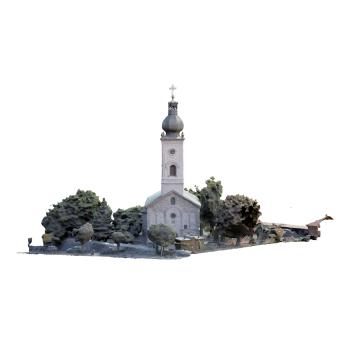
St. George's Church in Serbia

St. George's Church in Serbia

A Orthodox church located in Kniajevac, Serbia. It is a historic religious building with significant cultural and spiritual value to the local community. The architectural style and decorative details reflect the characteristics of 19th century Serbian religious architecture, and its interior decoration may include exquisite murals and icons, showcasing the tradition and spirit of Eastern Orthodox art. Not only is it the center of local religious activities, but it is also an important component of the historical and cultural heritage of Kniajevac. Witnessing the development of Serbian society and religious life is an important link connecting the past and present.
St. George's Church in Seville

St. George's Church in Seville

Located in Kniajevac, Serbia. This church is a religious building of the Serbian Orthodox Church and has significant cultural and historical value. The origin can be traced back to the early 19th century, specifically starting construction in 1833 to commemorate Prince Milos Obrenovic's first visit to the region. The construction was completed in 1835, and the bell tower and clock were added shortly thereafter. Not only is it the religious center of the local community, but it is also an important component of the region's historical and cultural heritage. Witnessing the development of Serbian society and religious life is an important link connecting the past and present.
The oldest mill in Baltimore, USA

The oldest mill in Baltimore, USA

Owens Mills, located in Baltimore County, Maryland, USA, is the largest and oldest surviving mill in Baltimore County. Built in the early 1790s by ambitious businessman and revolutionary patriot Samuel Owens. Not only is it a historical relic, but it is also a model of merchant mills established during the post-war investment boom. It showcases the characteristics of mill architecture from that era, with its red brick structure and historically significant mechanical components still preserved to this day. Although commercial operations have ceased, it has been preserved as a part of history and has become a symbol of local history and culture, attracting history enthusiasts and tourists to visit
Khodovichavan Cathedral in Ukraine

Khodovichavan Cathedral in Ukraine

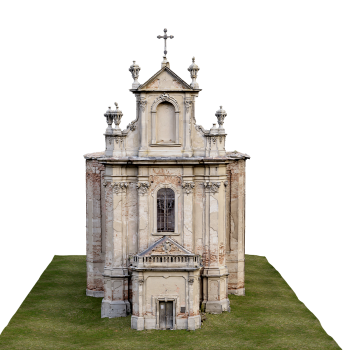
The Roman Catholic Church located in the village of Khodovytsia near Lviv, Ukraine. The establishment can be traced back to the 13th century, with the earliest recorded document appearing in 1498. The architectural history of the church has undergone multiple changes. The original wooden church was burned down during the Tatar attack in 1621, and a stone church was rebuilt on the original site. In the mid-18th century, due to the poor structural condition of the church and the risk of collapse, the pastor of a church near Navaria decided to invest in the construction of a new church. The famous architect Bernard Meretin was commissioned to design this church at that time.
Serbia Suldulic Martyrs Memorial Hall

Serbia Suldulic Martyrs Memorial Hall

A commemorative building located in Serbia, built in 1924, to commemorate the Serbian people who suffered and were killed during World War I. The establishment of this memorial hall is a tribute to that dark history and a respect for the victims. In 1943, Bulgarian occupiers destroyed the memorial hall and reburied the remains at multiple locations in Surdulic. In 2009, while building a family tomb, the remains of a martyr were accidentally discovered. These remains were cleared and buried in the memorial hall, which was also restored in 2009.
Abandoned Soviet schools

Abandoned Soviet schools

It is one of the abandoned educational facilities after the dissolution of the Soviet Union. These schools are usually located in remote areas, and due to insufficient government funding, they cannot receive effective maintenance and support, resulting in a gradual loss of population and abandonment of the schools. From these abandoned schools, one can see the classrooms, buildings, and various teaching equipment of the past, but there is no trace of students and teachers anymore. These relics have become witnesses to history, reflecting a part of the education system during the Soviet era, as well as the social and cultural landscape of that time. Not only is it a review of past educational models, but it also triggers people's thinking on education, social change, and the protection of historical heritage.
The Khotke Family Tomb in Czech Republic

The Khotke Family Tomb in Czech Republic

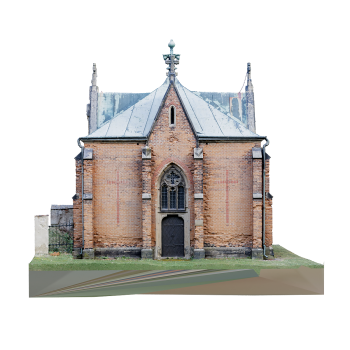
The Holtek family tomb located in Valtilov, Czech Republic, is a monument of historical and architectural value. It is an important representative of Gothic architectural style, known for its complex design and cultural heritage value. This tomb is a permanent commemoration of influential members of the local aristocratic Holtke family in the 19th century, showcasing the exquisite craftsmanship of the craftsmen at that time. Highlighting its Neo Gothic decorative details. Not only is it a historically significant location, but it is also a marvel of architecture, reflecting the evolution of artistic sensibility during the construction period. It is part of the rich cultural tapestry of Czech Republic.
Rijnieku Windmill in Latvia

Rijnieku Windmill in Latvia

A historic windmill located in Latvia. It was built based on Dutch design drawings and was constructed between 1867 and 1869. This type of windmill was considered suitable for large and powerful windmills at that time. Not only does it represent a traditional milling technique that utilizes wind energy, but it is also a part of Latvia's industrial heritage with a unique architectural style and historical value. It is usually used for grinding grains or pumping water, and its specific function and historical background may be related to its geographical location and agricultural needs at that time. Not only does it showcase engineering technology from history, but it also provides a way for modern people to understand past lifestyles
The Ruins Church of Rakovets, Bulgaria
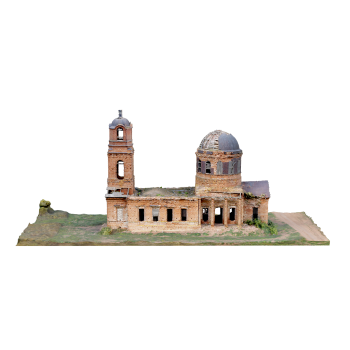
The Ruins Church of Rakovets, Bulgaria

A church located in Rakovets, Bulgaria, built in the mid-19th century, specifically between 1822 and 1856, replacing an old wooden church from the early 18th century (1704) and consecrated in 1856. It was partially burned down in 1880 and subsequently rebuilt. Build using locally chiseled limestone. In 1946, the church was closed and most of its interior decorations were burned down. Between 1952 and 1980, this church was used as a warehouse. Until recently, although buildings were still covered with ceramic roof tiles, only the walls of the temple have been preserved.
Abandoned Christian churches in Russia

Abandoned Christian churches in Russia

Petrov gunsmith's villa
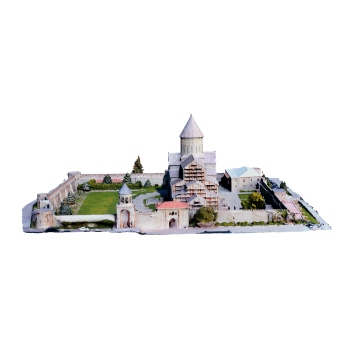
Petrov gunsmith's villa

A historical residence located in Russia, famous for its association with the famous gunsmith Petrov. Built in the late 19th century, it was once the summer residence of Petrov, a renowned gunsmith known for his outstanding craftsmanship and innovative designs. This villa embodies the architectural style of the time, with a charming wooden exterior and intricate details. Located in a picturesque rural environment, it provides a peaceful escape from the hustle and bustle of city life. Surrounded by lush gardens and beautiful scenery, it showcases Petrov's love for craftsmanship and his way of life. Appreciate the skills and dedication of this gunsmith.
Mtskheta, Georgia

Mtskheta, Georgia

Mtskheta, located in Georgia, is an Eastern Orthodox cathedral with extremely high religious and cultural value. Built in the 4th century AD, the existing structure was constructed in the 11th century by architect Arsakidze during the reign of King Bagrat III. As a masterpiece of the early Middle Ages, it has been recognized as a World Heritage Site by UNESCO. It is the second largest church building in Georgia and one of the most important religious landmarks in the country. The architecture is based on the cross dome style, which emerged in early medieval Georgia and became the main style after Bagrat III unified Georgia.
Abandoned buildings in Riga, Latvia

Abandoned buildings in Riga, Latvia

Catholic Church of Auxerre, France

Catholic Church of Auxerre, France

A Catholic church located in the town of Auxerre in the Nouvelle Aquitaine region of France. Built in the 13th century and renovated in the 15th century, it falls under the jurisdiction of the Archbishop of Limoges. Composed of a single nave dating back to the 12th century, with a painted paneled ceiling at the top, the church ends with a flat end. Not only is it the local religious center, but it is also a part of the rich religious architectural heritage of the region. Along with the Romanesque art of Uz è che, the circular church of Saint Bonnet la Rivi è re, and the painted lintel of Shaiac on the banks of the Charante River, it constitutes an important artistic and architectural attraction in the area.
Santa Maria de Cadet Church in Spain

Santa Maria de Cadet Church in Spain

A Romanesque church located in the Bois Valley of Catalonia, Spain, known for its high-density Romanesque architecture and listed as a UNESCO World Heritage Site. It is one of the nine Romanesque churches in the region, each with its own unique charm and highly valued for its well preserved state. Known for its spectacular rear hall and decorative details, the rear hall is decorated with Lombard style blind arches, serrated ribbons, and pilasters. It is the only church in Boye Valley that does not have a bell tower, but instead has a Baroque style bell shaped gable located above the main facade. The restoration work aims to maintain its state from the early 20th century
The church under construction in Crete, Greece

The church under construction in Crete, Greece

Thibaudier Residence in Japan

Thibaudier Residence in Japan

A historic Western style building located in Yokosuka City, Japan, which is part of the Yokosuka Modern Heritage Museum. Built around 1869, it was the official residence of Jules C é sar Claude Thibaudier, the deputy director of the Yokosuka Naval Arsenal. As one of the oldest Western style buildings on Honshu Island, it witnessed an important historical moment in Japan's modernization process. Before its demolition in 2003, it was an important landmark in Yokosuka City. Now, the Yokosuka City Museum of Modern Heritage is showcasing the original preservation materials of the residence and showcasing the development of the Yokosuka Naval Arsenal.
Sokorta, Croatia

Sokorta, Croatia

It is a medieval defensive fortress located near Dubrovnik, Croatia, situated on a hill above the village of Dunave, near the Croatian Bosnian border. Originally built in the 14th century as a defensive fortress, it played an important role in protecting nearby villages. Having sturdy stone walls, towers, and other defense mechanisms to resist intruders. In 2013, after extensive restoration work, this castle was opened to tourists, and many historical relics were discovered during the restoration process, some of which can be traced back to the late Bronze Age and early Bronze Age.
Kaliningrad Soviet House

Kaliningrad Soviet House

The Soviet House located in Kaliningrad, also known as the Soviet Building, is a grand and symbolic building. The construction began in 1970, but it has not yet been completed and put into use. Located in the central square of Kaliningrad, at the intersection of Shevchenko Street and Lenin Street. Considered one of the tallest buildings in the city, it consists of two connected 21 story towers. At present, it is closed to tourists and does not provide any practical use, but it continues to attract the attention of tourists and citizens. There are active discussions about its future use or development projects, and some initiatives are proposed to transform it into a hotel or cultural center.
Turku Ancient Cattle Shed, Finland

Turku Ancient Cattle Shed, Finland

The ancient cowshed in the Kulala area of Turku, Finland, is part of the region's historical and cultural heritage. Built between 1920 and 1930, it is part of the Kurala Village Historical Life Museum, which is dedicated to showcasing the lifestyle of rural Finland in the 19th century. Kurala Village is a living historical village with a history dating back to the Iron Age, spanning over a thousand years. This region has been inhabited by humans since the 7th century and has now become a showcase of the typical historical environment of Southwest Finland. Not only is it an agricultural heritage, but it is also an important place to learn about the history and culture of rural Finland.
Baltimore Ancient Warehouse Kuta, USA

Baltimore Ancient Warehouse Kuta, USA